
Hessameddin Nemati, University Lecturer and Business Consultant
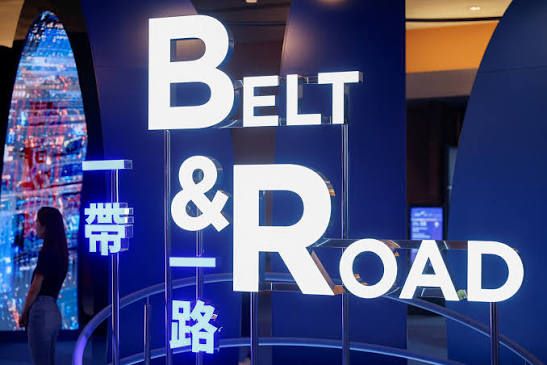
The Belt and Road Initiative (BRI), introduced by the Chinese government in 2013, represents a new model of inclusive globalization and a reconfiguration of the international political-economic landscape. Relying on extensive infrastructure investment, the facilitation of trade, and the development of connectivity, this transnational mega-project has positioned Chinese multinational enterprises—including both state-owned companies and leading private-sector firms—as operational arms of China’s economic diplomacy at the forefront of expansion into emerging markets. However, the internationalization of these firms in host countries has consistently been accompanied by institutional complexities, political sensitivities, and the fundamental challenge of the liability of origin, or country-of-origin effect.
In the literature of international management, obtaining and maintaining institutional legitimacy is regarded as a vital prerequisite for the survival, growth, and social acceptance of multinational corporations in foreign markets. Based on Richard Scott’s three-dimensional theoretical framework, institutional legitimacy manifests itself in three fundamental dimensions: 1) regulatory legitimacy, arising from full compliance with the laws, regulations, and legal requirements of the host country; 2) normative legitimacy, referring to the alignment of corporate strategies with stakeholders’ values, ethical expectations, and social standards; and 3) cognitive legitimacy, which rests upon deeply rooted cultural beliefs, mental frameworks, and the taken-for-granted and internalized acceptance of a firm by the host society.
In emerging markets along the Silk Road corridors, Chinese companies often face institutional voids, regulatory instability, and fluctuating media narratives. In such an environment, relying solely on traditional marketing strategies and price advantages is insufficient. Consequently, the development of non-market strategies—emerging from an organic linkage between corporate social responsibility and corporate political activity—has become one of the principal tools through which firms address conflicting institutional pressures. In this process, corporate branding has acquired dimensions that extend beyond commercial marketing and has come to function as “brand diplomacy”: an innovative process in which corporate identity becomes synergistically aligned with the home country’s economic diplomacy and contributes to reshaping the broader image of the country of origin in emerging markets.
The Synergy Between China’s Economic Diplomacy and Corporate Branding Strategies
At the macro level, China’s economic diplomacy is built around the narratives of a community with a shared future, win-win cooperation, and the principle of non-interference in the internal affairs of other countries. These overarching political narratives provide a diplomatic umbrella and an initial degree of legitimacy for Chinese companies entering foreign markets. A closer examination of commercial relations, however, reveals that a corporate brand’s heavy dependence on state diplomacy can function as a double-edged sword. On the one hand, direct support from the Chinese government and backing from financial institutions such as the China Development Bank and the Asian Infrastructure Investment Bank facilitate access to financing and the execution of major infrastructure contracts. On the other hand, state ownership or visible links with Beijing can trigger intense regulatory scrutiny within host societies and lead to a decline in legitimacy due to suspicions that companies are implementing geopolitical agendas.
To overcome this institutional paradox, leading Chinese companies have adopted a sophisticated approach explained in the strategic management literature through the “Yin and Yang” framework and the theory of co-evolution. Within this analytical model, state-oriented strategies—alignment with Beijing’s geo-economic priorities—and localization strategies—adaptation to the needs of local stakeholders—are managed as two opposing yet complementary forces. Multinational companies seek to maintain a dynamic balance between home-country legitimacy, which involves meeting the priorities of the Chinese government, and host-country legitimacy, which requires responding to the expectations of the local society.
Corporate brand diplomacy can achieve genuine synergy only when firms are able to internalize the host country’s development objectives within their own brand identity. This process requires a clear distinction between market-based legitimacy—including price competitiveness, product quality, and technological innovation—and non-market legitimacy, which encompasses commitments to sustainable development, improvements in local welfare, and respect for cultural values. Companies such as Huawei and Tsingshan Group, by linking their corporate brands to national projects in host countries while simultaneously investing heavily in localized corporate social responsibility programs, have managed to move beyond conventional commercial relationships and achieve relational legitimacy, while also reconstructing psychological contracts with local communities.
Regional Dynamics: A Comparative Perspective on Central and West Asia
The implementation of brand diplomacy and corporate social responsibility strategies by Chinese companies in the two key regions of Central Asia and West Asia demonstrates distinct patterns, resulting from fundamental differences in institutional structures, stakeholder expectations, and levels of economic development.
Central Asia: Natural Resources, Transit Infrastructure, and the Management of Local Sensitivities
As China’s immediate neighbor and a central overland corridor of the Belt and Road Initiative, Central Asia has become a major arena for resource-oriented investment in energy and mining, as well as the development of transit corridors. In this region, although Chinese state-owned companies enjoy considerable regulatory legitimacy due to Beijing’s close relations with governing political elites, they face serious challenges in the normative and cognitive dimensions of legitimacy among broader segments of society. Historical concerns over China’s economic dominance, the lack of transparency in contracts, and the large-scale presence of Chinese labor alongside limited employment opportunities for local populations have contributed to heightened social sensitivities.
In response to this environment, the brand diplomacy of Chinese companies in Central Asia has increasingly shifted toward operational localization and tangible corporate social responsibility programs. Companies active in the energy sector, such as China National Petroleum Corporation, have redirected their CSR investments away from sporadic charitable assistance and toward the development of durable social infrastructure, including the construction of hospitals, the establishment of vocational and technical training centers for local youth, and the implementation of water supply projects. Through such measures, they seek to strengthen their normative legitimacy.
West Asia: Large Markets, Digital Transformation, and Neutral Technology Diplomacy
In West Asia, particularly among the member states of the Gulf Cooperation Council, Chinese companies’ investment motivations have expanded beyond the simple extraction of resources toward strong consumer markets, the development of strategic ports, renewable energy, and, especially, communications infrastructure under the framework of the Digital Silk Road. Countries in the region, guided by their large-scale national development plans, require technological partners capable of accelerating their economic transformation without political interference or the imposition of ideological conditions.
In this context, Chinese brands such as Huawei and ZTE have built their brand diplomacy strategies around an image of “innovation leadership, advanced technology, and reliability.” Through active participation in the development of 5G networks and smart-city infrastructure, these companies have achieved substantial regulatory and market-based legitimacy. Nevertheless, the primary challenge facing Chinese companies in West Asia is the management of geopolitical risks arising from great-power competition. Their non-market strategy in the region has therefore centered on protecting an independent commercial identity, complying with international standards of corporate governance, and maintaining active neutrality.
China’s Approach Toward Iran: A Conservative Balance Between Sanctions and Comprehensive Cooperation Programs
China’s economic and corporate approach toward Iran has been shaped by complex geopolitical dynamics, the pressure of unilateral Western sanctions, and Beijing’s broader strategic priorities. Despite the signing of the 25-Year Comprehensive Cooperation Program between the two countries, the behavior of Chinese companies—particularly major state-owned enterprises and globally active brands—toward Iran has remained highly cautious and based on careful risk-reward calculations. On the one hand, China views Iran as a key actor in the Belt and Road Initiative and as an energy and transit hub in West Asia. On the other hand, due to the risks associated with secondary sanctions, it has shown limited willingness to expose its leading brands and publicly listed companies to high-profile projects in Iran.
Within this context, China’s brand diplomacy and corporate presence in Iran have followed a path different from that observed elsewhere in the region. Rather than relying primarily on major multinational corporations, China’s presence has often been conducted through second-tier companies, unlisted firms, or intermediary channels. Although this approach addresses China’s immediate economic needs and its energy imports from Iran, it has also created a gap in advanced technology transfer, long-term infrastructure investment, and tangible corporate social responsibility programs. Consequently, China’s corporate branding project in Iran faces cognitive and normative challenges among the general public and economic actors, producing a largely pragmatic and cautious image of Beijing’s commercial engagement.
Corporate Social Responsibility and Marketing Communications: From G2G Engagement to Social Legitimacy
The evolution of Chinese multinational companies’ behavioral patterns reflects a transition from reactive corporate social responsibility toward strategic CSR integrated with marketing communications. During the initial phases of Belt and Road implementation, many Chinese corporate investments faced intense media criticism due to weak public communication, inadequate environmental impact assessments, and insufficient attention to local civil-society institutions. Research evidence indicates that negative media coverage related to “corporate social irresponsibility” can significantly increase the likelihood of failure in completing cross-border contracts and international acquisitions undertaken by Chinese companies.
In response to such negative media narratives, Chinese companies have reconfigured their CSR and marketing communication strategies around two operational pillars.
The first is a shift from superficial approaches toward green signaling and compliance with environmental, social, and governance (ESG) standards. While earlier empirical analyses suggested that Chinese companies had, in some cases, shown a tendency to invest in countries with weaker environmental standards, Beijing’s new requirements for a Green Belt and Road and growing international public pressure have brought about a fundamental shift. Today, Chinese companies seek to demonstrate their commitment to sustainability as part of their corporate brand identity by obtaining international environmental certifications and investing in low-carbon technologies.
The second is a transition from one-way government-to-government (G2G) diplomacy toward multi-stakeholder and community-oriented engagement, including government-to-community (G2C) and business-to-consumer (B2C) interactions. The modern marketing communications of Chinese companies are increasingly based on authentic storytelling and on highlighting the positive impact of projects on the daily lives of local communities. The regular publication of sustainability reports in local languages, constructive engagement with local media, and the effective use of digital platforms are among the tools employed to counter negative narratives and rebuild the cognitive legitimacy of corporate brands.
Emerging Non-Market Challenges and Strategies: Third-Market Cooperation and Geopolitical Risk
An examination of the operational dimensions of Chinese companies’ internationalization in emerging markets reveals the emergence of new challenges and strategic responses that require careful analysis from a non-market perspective.
The phenomenon of selective deglobalization and the growing intensity of geopolitical risks have placed the cross-border activities of Chinese companies under the scrutiny of regulatory institutions. These pressures have increased the burden of the country-of-origin effect, particularly for companies operating in advanced technology sectors or those closely associated with the state. Under such circumstances, reliance on traditional market-entry mechanisms is no longer sufficient.
One strategic innovation for mitigating these challenges is the use of third-market cooperation. Within this framework, Chinese companies establish joint consortia with Western multinational corporations or reputable regional firms to implement infrastructure or industrial projects in countries along the Belt and Road. This trilateral approach not only distributes financial and operational risks but also enables Chinese companies to benefit from the reputation and brand equity of their international partners in order to gain institutional legitimacy and reduce geopolitical sensitivities.
At the same time, institutional voids and administrative corruption in certain developing countries create complex challenges for corporate governance. Different dimensions of corruption—particularly its prevalence and unpredictability—can seriously threaten a company’s regulatory and ethical legitimacy. Successful Chinese multinational companies seek to minimize the risks associated with illegal conduct in inefficient institutional environments by establishing rigorous internal self-monitoring systems and implementing high standards of transparency.
Proposed Strategies for Iran’s Smart Engagement with China
To elevate bilateral engagement from traditional raw-material trade toward strategic and sustainable partnerships within the framework of the Belt and Road Initiative, Iran can better understand China’s corporate behavior and adopt the following strategies:
- Institution-building, deregulation, and the reduction of regulatory and administrative risks: Providing the necessary incentives for first-tier, publicly listed, and reputable Chinese companies to enter the Iranian market—instead of unstable and informal actors—requires greater predictability in the economic environment and a tangible reduction in transaction costs. This objective can be achieved through deregulation, the consolidation and elimination of burdensome and contradictory regulations, an end to ad hoc directives, the protection of property rights, and the stabilization of dispute-resolution mechanisms. Furthermore, reducing burdensome bureaucracy through the genuine implementation of a one-stop investment window, streamlining customs and tax procedures as well as foreign-currency allocation and transfer processes, and systematically addressing corruption and administrative duplication would create a transparent and stable institutional environment for the sustained presence of China’s major industrial and technology companies.
- Requiring Chinese companies to implement CSR commitments and technology-transfer mechanisms: Iran should move beyond broad intergovernmental agreements and incorporate binding contractual provisions requiring the localization of supply chains, the training of skilled Iranian personnel, and investment in environmental and regional infrastructure in accordance with ESG standards. Such measures would strengthen the normative legitimacy of these projects in the eyes of the public.
- Utilizing the third-market cooperation model: By facilitating the formation of joint consortia involving Chinese companies and regional enterprises or neighboring countries—such as Iraq, Central Asian states, and the Gulf countries—Iran can reduce the geopolitical and sanctions-related risks faced by Chinese companies and position itself as a shared production and transit hub.
- Strengthening multi-stakeholder diplomacy and joint branding: Creating transparent platforms for media communication, facilitating B2C activities, and involving Iran’s private sector in Chinese projects can help prevent the emergence of negative media narratives and foster a more balanced relationship based on mutual interests.
Conclusion
The transformation of Chinese multinational companies’ behavior along the Belt and Road Initiative reflects a paradigm shift away from purely government-centered diplomacy (G2G) and price-based advantages toward corporate brand diplomacy and the adoption of sophisticated non-market strategies. Experiences in Central and West Asia demonstrate that overcoming the structural challenge of the country-of-origin effect and sustaining a long-term cross-border presence is impossible without linking commercial objectives to environmental, social, and governance sustainability standards, responding to the demands of local communities, and restoring a balanced form of three-dimensional legitimacy—regulatory, normative, and cognitive.
Within this framework, the use of co-evolutionary approaches, operational localization, and innovative mechanisms such as third-market cooperation represents Beijing’s strategic response to mitigating geopolitical frictions and managing institutional voids across this mega-project. From the perspective of development policymaking, the Belt and Road Initiative is not an automatic blessing; rather, it is a fundamentally transactional and opportunity-generating platform whose benefits depend on the rational calculations and bargaining capacity of host countries.
For Iran, moving beyond the position of a passive energy supplier and sustainably attracting first-tier, technologically advanced companies rather than second-tier and informal firms requires the simultaneous pursuit of two strategic priorities. On the one hand, Iran must optimize its domestic institutional environment through deregulation, lower transaction costs, and the reduction of burdensome bureaucracy. On the other hand, access to the Iranian market and national resources should be made conditional upon binding commitments to technology transfer, environmental and regional standards, and participation in regional consortia.
Ultimately, the future of this mega-project will depend on whether it remains limited to the role of a transit and commercial corridor or, through intelligent brand diplomacy and the internalization of shared interests, evolves into a sustainable, legitimate, and value-creating ecosystem for all stakeholders.