
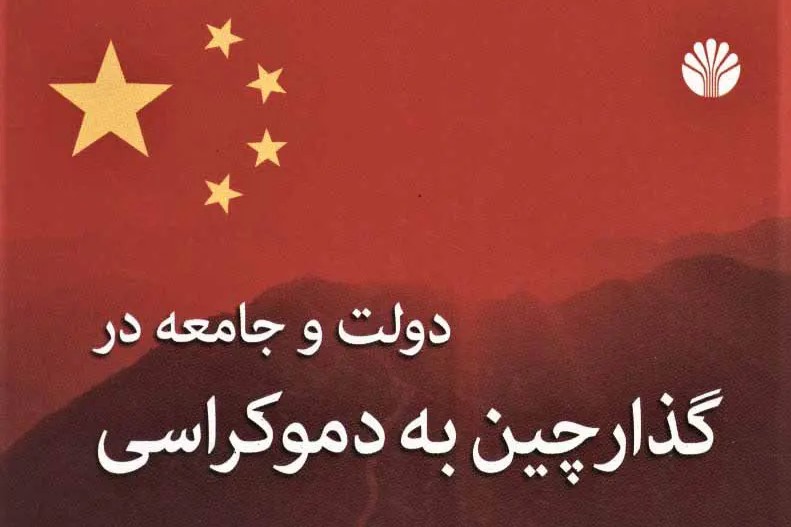
Author: Xiaoqin Guo Publisher: Akhtaran
The book “State and Society in China’s Democratic Transition” is one of the important research works in the field of Chinese politics, state-society relations, democratization, and economic development, and it addresses a central question: “Why, despite extensive economic reforms and rapid economic growth in China, has the state managed to remain dominant over society, and why has the democratic transition in China taken a different path compared to many classical theories of development and democracy?”. It should be noted that the original version of the book was published by Routledge in 2003.
The core argument of the book is that to understand the future of democracy in China, one cannot merely look at economic growth. The author believes that the historical and institutional configuration of state-society relations in China has caused the state to remain very strong and the society relatively weak. Therefore, contrary to the common belief that considers economic growth an automatic prelude to democracy, in China, economic development has not necessarily led to the emergence of a powerful civil society or an organized political opposition.
The author’s answer to the book’s main question is that in China, various social actors—from intellectuals to ordinary people, private entrepreneurs, and political dissidents—during the periods examined, have not been independent and organized enough to impose a democratic transition from the bottom up. For this reason, he considers a “top-down democratic transition” to be more likely.
Strong State and Relatively Weak Society
One of the most important concepts of the book can be summarized in the formula “strong state versus weak society”. The author argues that the Chinese state, due to a long historical tradition of centralized power as well as the Leninist party-state structure, has been able to maintain significant organizational power. In contrast, various social groups, including intellectuals, entrepreneurs, ordinary citizens, and even political dissidents, have not been able to become an independent and cohesive force to exert effective pressure on the power structure.
For this reason, the book is skeptical of the view that democracy in China can be formed solely through societal pressure and a massive grassroots movement from below. The author argues that the organizational weakness of civil society and the dependence of various social groups on the state structure limit the possibility of a rapid and revolutionary democratic transition.
The Role of Confucianism in the Book’s Analysis
The author examines Confucianism as one of the important historical contexts in shaping the relationship between state and society. Of course, he does not consider Confucianism to be the sole reason for the lack of democratization, but rather sees it as part of the historical and cultural structure that has influenced Chinese society’s attitude toward authority, order, and politics.
In the Confucian tradition, concepts such as respect for hierarchy, the importance of social harmony, the value of order and stability, and the central role of the government are of great importance. This historical tradition may have contributed to the formation of a state-society relationship in which direct conflict with political power is less welcomed compared to some other societies. Furthermore, the historical dependence of elites and intellectuals on the state structure has meant that the independence of society from political power has always faced limitations.
Within this framework, the author examines the relationship of the Confucian tradition with the bureaucracy, intellectuals, ordinary people, and the new class of entrepreneurs, showing that cultural heritage must be studied alongside modern political and economic structures.
Leninism and the Power of the Political Structure
If Confucianism is considered the historical and cultural background of the book’s analysis, Leninism actually constitutes the institutional structure of power in contemporary China. One of the important arguments of the book is that China’s economic reforms have not meant the destruction of the party-state structure. Although the Chinese economy has moved away from the era of central planning and the private sector and market have expanded, the Communist Party has still maintained a highly powerful organizational and political capacity.
In the Leninist structure, the party is not merely one political actor among others, but has an organizational presence in various sectors of the state and society. The relationship between the party, the bureaucracy, local institutions, and different segments of society allows the political structure to largely manage social and economic changes. For this reason, from the author’s perspective, economic growth has not necessarily led to a reduction in the role of the state.
The book specifically examines the relationship of the Communist Party with the bureaucratic elites and shows that economic reforms, while changing the power structure, have not dismantled the political machinery of the state.
Bureaucracy and the Possibility of Political Reform
Another important section of the book is dedicated to the role of bureaucracy in the democratization process. The author raises the question of whether administrative and bureaucratic elites can become a force for democratic reform. The book’s answer in this regard is complex and cautious.
On the one hand, bureaucrats have their own specific interests, attitudes, and motivations, and they might support reforms under certain conditions. On the other hand, their structural dependence on the existing political system means that one cannot simply expect them to turn into an opposition force. Many members of the bureaucracy might prefer stability, development, and the continuity of the political order over rapid and unpredictable changes.
However, this very bureaucracy can play an important role in a gradual transition under certain conditions. This issue later leads to one of the book’s most important conclusions: if democratization occurs in China, it is likely that part of it will be initiated from within the power structure.
Intellectuals and Political Opposition
A significant portion of the book is devoted to intellectuals, political movements, and the problems of the opposition in China. The author reviews the history of the intellectuals’ relationship with the Chinese state and then focuses on contemporary political developments, including the 1989 student movement and the Tiananmen events.
One of the book’s main arguments is that the existence of intellectuals and political dissidents alone is not sufficient to bring about a democratic transition. The opposition must be able to connect with a broader segment of society, gain popular support, build an organizational structure, and offer a credible political alternative. According to the author, one of the main problems of China’s political dissidents during the period under review was their limited connection with the masses and the existence of internal rifts within the opposition movement.
The book also addresses Chinese dissidents abroad and examines the political and organizational limitations of these groups. Overall, the conclusion of this section is that the Chinese opposition during the period examined was unable to become a force capable of directly pushing the political structure toward a democratic transition.
Ordinary People and Society’s Relationship with Democracy
The book does not present a simplistic picture of the Chinese people, nor does it suggest that Chinese society is uninterested in freedom or democracy; rather, it explores why dissatisfaction, political demands, or even theoretical support for democracy do not necessarily translate into organized collective action.
In this context, factors such as historical experience, the level of education and political awareness, the party’s power at the local level, concerns about instability, and the impact of economic growth become significant. After experiencing political and social crises, many people might prefer economic development and stability over rapid political changes.
The author demonstrates that improving living conditions and economic growth can enhance the state’s legitimacy or at least reduce the incentive for a part of society to pursue immediate political change. This issue becomes particularly important in the post-Tiananmen era, as economic development became one of the key sources of legitimacy for the political system.
Entrepreneurs and the Private Sector
One of the book’s most important questions is whether the growth of capitalism and the private sector in China can lead to the emergence of an independent, pro-democracy social force. Classical development theories generally believe that market expansion and the formation of a capitalist class help reduce society’s dependence on the state and pave the way for demanding political rights.
However, the author shows that China’s experience is more complex. Private entrepreneurs may become economically powerful, but they remain dependent on state structures for obtaining licenses, accessing resources, expanding their businesses, and maintaining their economic security. For this reason, economic success does not necessarily turn them into political opponents.
In many cases, cooperating with the political structure and establishing good relations with officials is more beneficial for an entrepreneur than political confrontation. Therefore, the growth of the private sector in China does not necessarily mean the creation of an independent and pro-democracy bourgeoisie. This is one of the book’s most important critiques of the simplistic understanding of the relationship between capitalism and democracy.
The Theory of Top-Down Democratic Transition
The most important theoretical conclusion of the book is probably the discussion of a “top-down democratic transition”. The book argues that if China embarks on the path of democratization, this transformation is likely to occur not through revolution, a sudden collapse of the system, or the direct pressure of a powerful civil society, but through gradual reforms from within the power structure.
According to this view, economic development can provide the necessary social and economic conditions for democracy, but the realization of democracy depends on political decision and will. Economic development may make society more complex, educated, and diverse, but translating these capacities into political reforms requires the action of political leaders and elites.
The summary of this view can be stated as follows: economic development makes democracy possible, but it is the political leadership that makes it a reality. This sentence is essentially the core of the author’s analysis regarding the future of democracy in China.
The Importance of the Book
The importance of this book lies in its challenge to a common assumption in political theories: that economic development automatically leads to democracy. China’s experience has shown that a country can have very high economic growth, create a large middle class, develop a market economy, and at the same time maintain its authoritarian political structure.
The present book explains this issue from the perspective of the relationship between state and society. From the author’s viewpoint, what matters is not merely the economic power of society, but the degree of its political independence, organization, and ability to translate demands into effective political pressure. A wealthy middle class, if dependent on the state or preferring existing stability over political change, does not necessarily become a democratic force.
The Book’s Limitations for Analyzing Today’s China
data relates to the 1990s and around the year 2000. Since then, China has experienced massive transformations; the digital economy has expanded, new technologies have played a greater role in the structure of the state and society, China’s international standing has changed dramatically, and the structure of political power has also undergone significant shifts.
Therefore, the book should not be considered a complete description of today’s China. Its main value lies more in its specific analytical framework. The questions the author raises about the relationship between economic development, civil society, the middle class, the private sector, and state power remain relevant for analyzing contemporary China.
Book Summary
Overall, the book State and Society in China’s Democratic Transition attempts to explain why China’s economic growth has not necessarily led to democratization. The author’s answer rests on a combination of the Confucian legacy, the Leninist structure of the state, and the specific characteristics of China’s economic development. In his view, China has a structure in which the state has enjoyed high organizational power, while civil society and various social groups, despite growth and transformation, have lacked sufficient independence and organization to force a democratic transition.
The most important conclusion of the book is that if China one day moves toward democracy, this transformation will likely not begin through a social revolution or sudden collapse, but gradually and via political reforms initiated from within the power structure. In this view, economic development is a necessary condition and paves the way for democracy, but it is not a sufficient condition. The realization of democracy will ultimately depend on the will and decisions of political elites and the transformation in the relationship between state and society.
From a research perspective, this book is considered a valuable resource, especially for studying Chinese politics, the Chinese Communist Party, political development, democratization, Confucianism, civil society, the private sector, and China’s political economy. It also provides a useful analytical framework for understanding the question of “why China’s economic development has not led to a Western model of democracy?