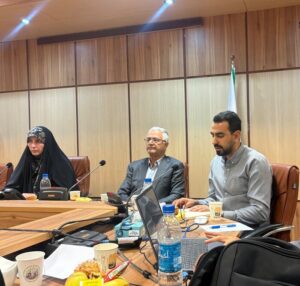
The session titled “Women, Family and Urban Management: A Strategic Dialogue between Iran and China” was held with the participation of a number of Iranian officials and experts. The meeting examined China’s experience in family policies, women’s empowerment, and urban services, emphasizing the importance of adapting these experiences to Iran’s social, cultural, and economic context.
China’s Experience in Neighborhood Management and Family Support
Mohammad Ali Shafiei, Deputy for International Affairs at the Tehran Municipality Communications Center, discussed China’s approach in recent years, noting that the country has sought to avoid directly replicating Western models while maintaining a balance between economic development and attention to social issues, families, and different groups within society.
Referring to China’s experience in neighborhood management, Shafiei highlighted the revitalization of an old neighborhood where traditional architecture and historical identity had been preserved while the necessary infrastructure for residents was simultaneously developed.
He also referred to childcare facilities, children’s recreational spaces, and service centers for older people in these neighborhoods. According to him, these centers provided medical services, vital-sign monitoring, and simple communication tools that enabled elderly residents to contact neighborhood service centers when necessary.
Shafiei noted that such services can help reduce some of the concerns faced by working women regarding childcare and elderly care, contributing to a better balance between employment, family life, and caregiving responsibilities.
He emphasized that drawing on China’s experience does not mean copying the Chinese model. Instead, approaches in Iran should be designed and adapted according to the country’s own cultural, social, and economic conditions.
The Transformation of Women’s Status in China
Ali-Mohammad Sabeghi, former Counselor of the Islamic Republic of Iran in China, discussed the historical transformation of women’s status in China, emphasizing the importance of considering historical developments and the role of the family in understanding the current situation of women in the country.
Pointing to the importance attached to family in both Iran and China, Sabeghi noted that women in traditional Chinese society faced restrictions in areas such as education, marriage choice, and social participation, while patriarchal structures influenced various aspects of their lives.
According to Sabeghi, beginning in 1911, the issue of women gradually became a national and social concern, and this process accelerated after 1949. He also referred to the 1950 Marriage Law as an important development that prohibited forced marriage and recognized freedom of choice and equal rights for women and men.
Sabeghi identified the All-China Women’s Federation as one of the important institutions active in the field of women and family. He noted that the organization works on issues including family health, marriage, women’s rights, employment, and entrepreneurship, and could serve as an important partner in exchanging experiences between Iran and China.
He also pointed to the growing participation of Chinese women in universities, science and technology, and political and economic spheres, while noting that educational advancement has not necessarily translated into greater employment opportunities. According to him, the “motherhood penalty” remains an important challenge for women and can affect employment, career advancement, and wages.
Sabeghi further noted that Chinese women in literature have moved beyond a stage in which others spoke about them and increasingly write about women, family, and their own social experiences. In his view, this represents a shift from women being the “subject” of narratives to becoming the “authors” of their own narratives.
He concluded that China’s experience cannot be fully replicated in Iran, but its achievements and development paths can be adapted to Iran by taking into account the two countries’ cultural, religious, and social differences.
The Potential of Women’s Diplomacy in Strengthening Iran-China Relations
Maryam Ardelili, Head of the Tehran Municipality’s Women and Family Center, highlighted the potential of interaction between women in the two countries to deepen relations between Iran and China.
Referring to previous cooperation with the All-China Women’s Federation and visits by Chinese delegations to Shahrbanoo Park, women’s parks, and 130 Kosar entrepreneurship centers in Tehran, Ardelili identified population and family issues as areas of common dialogue between the two countries and described Tehran’s women-focused infrastructure as a platform for exchanging experiences.
She also pointed to China’s renewed attention to family issues in recent years, citing support for mothers, maternity leave, insurance, flexible employment, and the creation of mother-and-child-friendly environments among the issues receiving attention.
Ardelili also referred to Tehran Municipality programs aimed at increasing women’s participation and utilizing their capacities in addressing urban challenges. She identified Shahrbanoo centers, women’s parks, Kosar complexes, and entrepreneurship workshops as examples of such infrastructure.
The Head of the Tehran Municipality’s Women and Family Center identified the development of home-based businesses and small local enterprises as an important area for exchanging experiences with China. She noted that around 130 Kosar entrepreneurship workshops are active in Tehran in this field, while support for women heads of households is also being pursued.
Ardelili expressed hope that continued dialogue would lead to joint projects, greater synergy, and the exchange of practical experiences between Iran and China.