
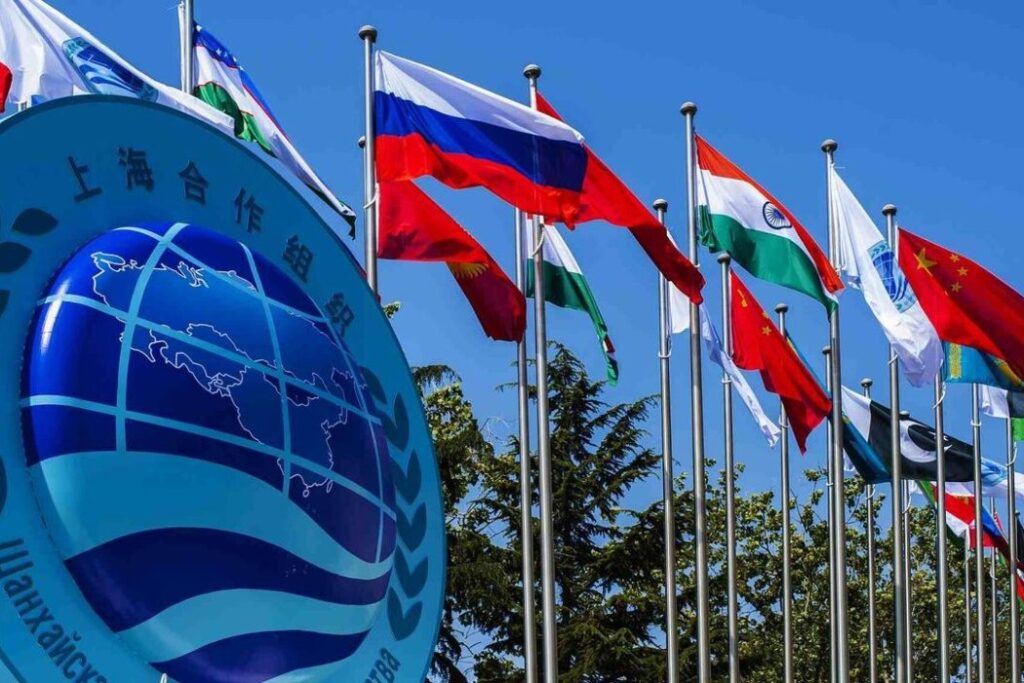
The 25th Shanghai Cooperation Organization (SCO) summit in Tianjin, China (August 31-September 1) was a turning point in the organization’s history, delivering results that were both more than expected and more tangible. Rather than setting ambitious goals, the Tianjin Declaration set out a more realistic agenda for global governance, emphasizing multipolar cooperation, sovereign equality, and the right of nations to develop on their own terms and priorities. At a time when Washington is trying to pressure parts of the global South, the Tianjin summit showed that a group of major non-Western powers are now ready to share their capacities and set the rules, rather than simply follow them.
In Tianjin, member states used the opportunity to present specific institutional proposals: including the establishment of a development bank within the framework of the Shanghai Cooperation Organization, the creation of a global energy cooperation platform, and the launch of a multi-year lending window tailored to the needs of members. China also presented the “Global Governance Initiative,” which, along with the three initiatives “Global Security, Global Development, and Global Civilization,” expresses China’s desire to reform global governance and the current global order and the order it desires. Technological convergence was also emphasized, including encouraging countries to use the Chinese satellite navigation system (Beidou), which was proposed as a way to reduce dependence on Western GPS. In addition to mentioning the initiatives proposed at the Tianjin summit and the transformation of the Shanghai Cooperation Organization from a purely security organization to a comprehensive regional organization, this note will also address the challenges facing the realization of these goals.
Initiatives proposed at the Shanghai Cooperation Organization summit
The Tianjin summit featured a variety of initiatives and development plans that demonstrate China’s determination to establish its own order in the decades ahead. China has well understood that Donald Trump’s inward-looking foreign policy and his “maximum pressure” approach against America’s trading partners in the region have provided Beijing with a historic opportunity. In fact, the Chinese government has so far taken full advantage of Washington’s policy of withdrawal from international institutions and organizations, and by strengthening its active and engaging diplomacy, it is trying to reorganize or strengthen its bilateral relations with countries in the region and beyond.
First, Chinese President Xi Jinping took the opportunity to introduce the “Global Governance Initiative,” a follow-up to China’s previous three global initiatives in the areas of global development, global security, and global civilization. Although the precise framework of this new initiative has not yet been clarified, it reflects China’s clear intention and direction to redefine the rules of global governance, a direction that stands in stark contrast to Trump’s decision to withdraw the United States from multilateral organizations led by the United Nations. In his speech, Xi outlined five key principles of the Global Governance Initiative: adhering to sovereign equality among countries, upholding the rule of international law, genuinely implementing multilateralism, emphasizing human-centeredness and people-centeredness, and focusing on practical and tangible actions.
Second, an agreement in principle was reached to establish the Shanghai Cooperation Organization Development Bank, which is to be financed by China with about 2 billion yuan in grants and between 10 and 14 billion yuan in preferential loans. If designed wisely, the bank could provide more diverse financing options for low- and middle-income countries struggling with cyclical fluctuations in capital flows and the fallout from sanctions. Such a bank could complement, rather than replace, existing multilateral development banks, while also redirecting projects toward cross-border connectivity and infrastructure that have been underfunded.
Third, the concept of an energy platform emphasizes the fact that developing economies need to hedge their energy price and supply risks, including through long-term contracts and multi-currency settlements. Fourth, at the summit, Beijing expanded member states’ access to its satellite navigation system, Beidou, a move that will boost civilian and military applications, from aviation and port logistics to defense equipment procurement.
پنجم، در حوزه امنیتی، رهبران این سازمان حمله «پاهالگام» در هند را محکوم کردند؛ اقدامی که دستاوردی دیپلماتیک برای هند به شمار میرود و نشاندهنده تلاش چین برای همسویی با دهلینو در مقطعی است که ایالات متحده با استناد به خرید نفت روسیه، تعرفههایی تا سقف ۵۰ درصد بر صادرات هند اعمال کرده است. ششم، در کنار این اقدامهای بسیار مهم، بر همکاری ضدتروریسم از طریق ساختار منطقهای ضدتروریستی (RATS) و همچنین برگزاری نشستهای فشردهتر شورای امنیت سازمان تأکید شد؛ مجموعهای از تحولات که نشان میدهد مأموریت سازمان همکاری شانگهای در حال گسترش از حوزه مالی به عرصه امنیت سختافزاری است. اعلام تأسیس چهار مرکز جدید در چارچوب سازمان همکاری شانگهای نشاندهنده این تعهد است؛ مراکزی که مأموریت آنها مقابله با مواد مخدر، مبارزه با جرایم سازمانیافته فراملی و تقویت همکاری در حوزه امنیت اطلاعات است.
Seventh, China announced that it would establish an AI cooperation center for member states and invited them to participate in China’s “Moon Research Station” project. Eighth, the SCO Development Strategy for 2026-2035 is a strong affirmation of the organization’s growth prospects in the coming decade and reflects the belief that long-term development planning can achieve common progress in various fields. The potential of this strategy is very significant, and the SCO is expected to strengthen cooperation in high-growth sectors, from energy and AI to green industries, science and technology, and other key pillars of the rapidly changing global economy.
Evolution in the Shanghai Cooperation Organization
In past centuries, the international order was shaped by Western states, first from European capitals and then from Washington. But that era seems to be coming to an end, and the world’s economic, political, and strategic center of gravity is shifting eastward. At the center of this transformation is the Shanghai Cooperation Organization, a bloc that is both a symbol of the rise of politics and a means of realizing it. What makes the SCO unique is its diverse composition. Unlike homogeneous Western-led alliances, such as NATO or the G7, the SCO’s strength lies in its ability to bring together rivals and partners under one roof. This heterogeneity is not a weakness, but a sign of deep strategic pragmatism.
It provides a necessary platform for ongoing dialogue and creates mechanisms that help manage differences and resolve conflicts without the intervention of third-party mediators. In this way, Asian/Eurasian solutions to Asian/Eurasian issues are being formed. Meanwhile, the scope of its influence continues to expand. The accession of Iran and the interest of countries such as Turkey and some Gulf states – which participate as observers or dialogue partners – indicate the organization’s growing appeal. The Shanghai Cooperation Organization, founded in 2001, initially focused on joint intra-regional efforts to counter terrorism, separatism and extremism in Central Asia. However, it quickly became a strategic counterweight to global power structures.
The SCO’s fundamental principles, including non-interference in the internal affairs of countries, respect for national sovereignty, and support for a multipolar world, stand in stark contrast to the interventionist tendencies of Western institutions. This view resonates with audiences around the world who are fed up with Western hegemony and unilateralism. According to statistics, in 2024, the trade volume between China and other SCO member states, observer states, and dialogue partners reached about $890.3 billion, accounting for about 14.4 percent of China’s total foreign trade.
Since its establishment, the path of development and cooperation within the framework of this organization has witnessed fundamental and historic achievements that have significantly contributed to strengthening peace and development at the regional and global levels. In line with the continuous transformations in the international system, the recent summit demonstrated the determination and action of the Shanghai Cooperation Organization to achieve more inclusive development, more equitable reform of the global governance system, and strengthen solidarity and cooperation of the Global South. In the most symbolic moment of the summit, Vladimir Putin and Narendra Modi walked hand in hand to Xi Jinping to talk to him. In fact, this scene of unity of the three leaders was an open and public response to Trump’s efforts to pressure China and India to reduce energy purchases from Russia.
Many believe that the main focus of the Shanghai Cooperation Organization has undergone a “subtle and gradual” transformation, and now it has acquired a more prominent economic dimension. The main focus of the organization has changed somewhat. Initially, the organization was formed with the aim of strengthening security, but now it is changing in an interesting way to include not only security but also economic cooperation. This change of direction can be said to be the result of the aggressive external environment and the strict actions and policies of Western powers.
Challenges Ahead
Despite the progress made at the recent SCO summit, the heterogeneous composition of its members—including India’s differing perceptions of the threats and concerns of Central Asian countries about possible Chinese hegemony—means that the SCO cannot and will not be able to be seen or act as a unified anti-Western bloc. This diversity, while limiting, is also an advantage, as it forces the organization to proceed with a technical and problem-oriented approach that is not outwardly threatening and is gradually gaining more legitimacy in the international system.
As previously discussed, despite the success of the summit in setting a new agenda for global governance, the SCO faces serious challenges on the way forward. Differences in political systems, unresolved border disputes, and bilateral disputes among members have led to persistent frictions. The institutional proposals put forward in Tianjin should also be designed with debt sustainability in mind and adherence to open and transparent standards in order to gain broader legitimacy. Furthermore, while condemning terrorism is a positive step, genuine intelligence cooperation and adherence to fair legal mechanisms remain among the most difficult tasks ahead.
Another emerging challenge is emerging: the Shanghai Cooperation Organization, which was originally established with a primary focus on regional security, now faces the risk of losing that focus as its membership expands, as attention to non-security areas increases. While non-security issues can be pursued in other multilateral institutions, the region still suffers from the lack of an organization specifically focused on security. Also, current and future members of the organization may differ in the nature and intensity of their security priorities. For example, India’s main concern is terrorism, while for the Commonwealth of Independent States, the main threat is the spread of fundamentalist Islamic teachings.
Outlook ahead
The Shanghai Cooperation Organization (SCO) summit in Tianjin gave new energy and momentum to the common goal of countries to accelerate the reform of global governance and bring together the countries of the global South to shape an inclusive global order that can withstand the rising tide of unilateralism and trade protectionism. The Tianjin Declaration stressed the need to create a new type of international relations, calling for the formation of a community with a shared future for humanity and the development of dialogue around the idea of “One Earth, One Family, One Future.” This idea was inspired by the motto of India’s G20 presidency, which itself is based on the ancient Indian philosophy of “Vasudhive Kutumbakam,” meaning “the world is one family.” In recent years, China has tried to link the idea of “a community of humanity with a shared future” to the “Shanghai Community with a Shared Future” and transform the organization into a pan-Asian organization.
For a large part of the global South, the Tianjin summit will be remembered not only for what was signed, but also for what was revealed: That trying to pressure large emerging economies could backfire. In this case, tariffs intended to influence Russian policy actually encouraged India to demonstrate its policy independence. The 2025 SCO summit in Tianjin produced a set of outcomes that, while seemingly relatively limited, are strategically significant. The SCO appears to be trying to transform itself from a platform for dialogue into a full-fledged mechanism for practical cooperation, one that delivers tangible results for the citizens of its member states.
One of the strengths of this historic summit was its ability to promote new cooperation mechanisms and establish centers of expertise on agreed areas, raising hopes for deeper industrial cooperation, government and policy support, and a people-centered approach to future economic empowerment. China’s plans to implement dozens of “small but beautiful” livelihood projects, expand human resource training, and allocate more than $280 million in grants to SCO member states this year demonstrate that practical plans only make sense when backed by concrete and actionable commitments.
The recent SCO summit in Tianjin was clearly focused on “gradual innovation.” Rather than issuing sweeping declarations of dramatic ruptures with the Western-led global order, the summit explored ways and mechanisms through which parallel institutions could be created to enhance the autonomy of member states while maintaining a semblance of compatibility with existing arrangements. The result is a model of global governance that is less based on open confrontation and more on “institutional consolidation” and the “gradual accumulation of alternative mechanisms and practices”—one that seeks to reorganize existing systems rather than abruptly, but rather in stages. The SCO is moving from the hard security path of its early years to geoeconomic institutionalization; An order in which China seeks not to overthrow the existing structure, but to coexist with and gradually redefine it. This path forms the essence of the order China desires. In other words, rather than replacing or overturning the established order, the SCO is creating new layers; arrangements that coexist with the existing system, but gradually overshadow the dominance of the current structure.