
Maryam Irannejad, MA in us study, University of Tehran and Researcher in American Studies
Introduction
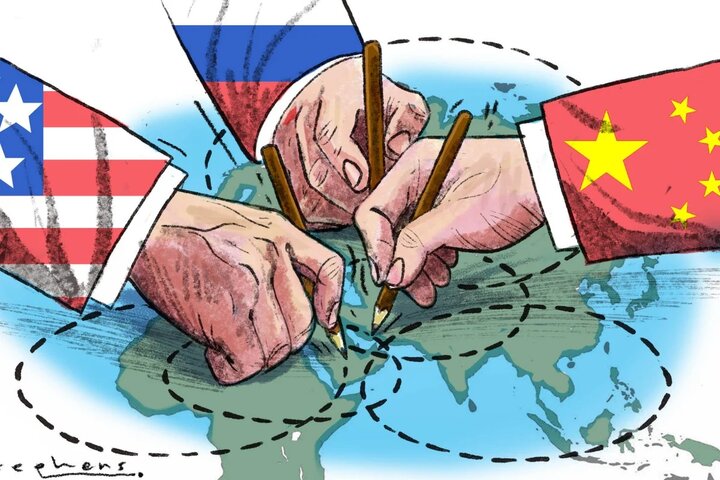
From the perspective of the United States, China’s economic and infrastructural presence in South America has become a security issue, as China has established significant influence in the region through economic, infrastructural, and commercial investments, as well as large-scale projects. Consequently, due to its historical position in the strategic calculations of the United States in the Western Hemisphere, South America has transformed into one of the arenas of geopolitical competition between the two powers as China expands its economic and infrastructural footprint. After moving past Washington’s relative decline in attention to this region, with Trump’s presence in the White House and the political opportunity created by new conservative governments in the region—such as Argentina, Peru, and Chile—and security and military cooperation with these countries, South America has become one of the main axes of US policy in the Western Hemisphere. Although these countries still maintain special economic-commercial relations with China, they also have undeniable cooperation with Washington in areas such as security, combating transnational crimes, and strengthening strategic ties. The bulk of China’s activities in South America possesses strategic volume and dimensions in the fields of macro-infrastructure, 5G internet technologies, rare earth minerals, and military equipment. Alongside controlling maritime chokepoints and deep-water ports, Chinese state-owned enterprises are participating in port construction projects.
Expansion of China’s Strategic Presence
According to a report by the US House Select Committee in February 2026, at least eleven space facilities linked to China have been established in Argentina, Venezuela, Bolivia, Chile, and Brazil. China operates its largest overseas space center in Argentina, over which Argentine officials have limited access and oversight. Furthermore, ground satellite stations have been set up by Beijing in Bolivia, Brazil, Ecuador, and Venezuela.
The extraction of rare earth minerals such as lithium and investment in renewable energies are also at the center of Beijing’s attention. Beijing has a special focus on lithium extraction in the Lithium Triangle (Argentina, Bolivia, and Chile), which contains half of the world’s lithium reserves. These efforts are aimed at solidifying Beijing’s dominance over the supply chains of critical future industries for the world. In addition, China’s mining investments in Latin America have been concentrated in countries like Peru and Brazil. Prominent examples include the participation of Chinese companies in the Las Bambas copper mine in Peru and investments by Chinese companies in copper, gold, and tin projects in Brazil. Conversely, investments by American companies in projects in Brazil, Peru, and Chile also indicate the expanding competition over the region’s mineral resources. However, the aforementioned examples alone are not sufficient to determine each country’s share of total Chinese and American investment. Between 2014 and September 2026, Chinese investment in Latin America’s mining sector reached $10.05 billion—a figure higher than the $8.38 billion invested by the United States during the same period. However, the investment trend has changed in recent years. From 2022 to September 2026, US investment surpassed China’s, recording $4.5 billion compared to China’s $2.77 billion. This difference may indicate that although China held a prominent position in the region’s mining investments over the entire period examined, the competition for access to critical mineral resources has been accompanied by an increase in US investment in recent years.
The construction of railway lines in Bolivia and Argentina, industrial parks in Trinidad and Tobago, road building in the jungles of Costa Rica, the construction of the Coca Codo Sinclair hydroelectric plant in Ecuador, the control of Lima’s electricity grid by two Chinese companies, and the increase in China’s share of Peru’s agricultural exports are among other prominent examples of this cooperation. By utilizing massive investments and creating economic dependencies, China dictates its trade conditions and attempts to marginalize the traditional influence of the United States in the Western Hemisphere.
Case Study of the Port of Chancay, Peru
China is also involved in regional port construction projects, almost all of which are undertaken by Chinese state-owned enterprises. Peru is considered a prominent example of the expansion of China’s influence from the economic sphere to the security sphere. Peru’s cooperation with China can be explained within the framework of efforts to attract capital, develop port infrastructure, and strengthen trade ties with Asia. Joining the Belt and Road Initiative in 2019 and the role of the Chinese company COSCO in the construction and operation of the Chancay mega-port can be seen as the central focal point of Sino-Peruvian cooperation. According to documents submitted to the US House Committee on Homeland Security, the shipping company COSCO owns 60 percent of this port and operates it exclusively; its annual capacity is stated to be around one million containers, and its extensive surveillance infrastructure raises concerns about dual economic-military use. This issue could allow for intelligence or military use of the infrastructure, thereby reducing US influence and increasing China’s strategic advantage. Therefore, contrary to extensive economic partnership, it can be argued that US security cooperation with Peru has a stronger justification. Joint military exercises, intelligence sharing, defense infrastructure development, and strengthening naval capabilities should, from the US perspective, prevent the conversion of China’s commercial assets into military capacity.
This mega-port, built through a $1.3 billion project by the Chinese state-owned company COSCO, is estimated to generate $4.5 billion in annual revenue and create over 8,000 direct jobs in its first phase. This port has reduced maritime transit time between Peru and China from 35 days to 23 days; this new route enables direct movement between Chancay and Chinese ports, including Shanghai, and reduces logistical costs by at least 20 percent. It also acts as the main hub for exporting products from Brazil, Chile, Colombia, and Ecuador to Shanghai.
This project reveals three key challenges for the US: (1) the growing risks of economic coercion made possible by rapid Chinese investment, (2) the lack of credible developmental alternatives, and (3) the misalignment in the policy narratives of the US and Peru. Furthermore, from a security perspective, the presence of Chinese companies in critical port and communication infrastructure can raise questions for the United States regarding access to operational data, logistical dependencies, and the dual-use capability of this infrastructure. Nonetheless, translating these concerns into claims of actual espionage or military capacity requires specific evidence regarding how each facility is operated.
Security Implications of Dual Commercial-Security Functions from the US Perspective
The primary concern of the United States is not merely China’s economic investment, but the dual nature of strategic infrastructure. Ports, communication centers, and commercial infrastructure can have economic applications in normal circumstances but can be converted into intelligence, logistical, or military capacities during a crisis or war. For this reason, China’s economic presence in this region becomes a national security issue. The US is expected to ensure, through military cooperation with regional governments, that sensitive infrastructure remains under the control of local governments and does not become a tool for Chinese influence or military power.
In the view of the US government, China has expanded its presence in the Western Hemisphere over the past two decades by gaining access to ports, critical infrastructure, investments, and military cooperation. Concurrently with the restriction of US military training and exchanges with South American armed forces, China has increased the scope of such exchanges and even participated in joint military exercises. The reported participation of Chinese forces in a joint exercise with the Brazilian Navy in 2024 can be seen as an example of this trend.
China’s economic investment in strategic infrastructure increases the capacity for the long-term presence of Chinese companies. If this infrastructure includes communication systems, data centers, surveillance equipment, or port facilities, they may create intelligence and logistical capabilities in addition to commercial functions. From a security standpoint, US concerns increase when ownership, operational access, or data control could turn into a strategic advantage for China during a crisis.
US Strategy Towards China
According to a Heritage Foundation report by Martin Fernandez and Beaver, Washington’s proposed strategy regarding the expansion of China’s influence in South America could be based on strengthening security and military cooperation with regional countries and using this cooperation as a counterbalance against Beijing’s economic and geopolitical influence. The expansion of Chinese investment in strategic infrastructure, particularly ports and critical economic sectors, could have long-term consequences beyond the realm of trade, providing Beijing with potential capacities for intelligence and logistical exploitation. From this perspective, the Port of Chancay in Peru serves as an example of the link between China’s economic presence and US security concerns. In response, Washington should emphasize expanding joint military exercises, increasing intelligence sharing, strengthening defense cooperation with regional governments, protecting critical infrastructure, and increasing the resources of the US Southern Command. Furthermore, by highlighting national sovereignty considerations and offering tangible opportunities for security cooperation, the US should strengthen its position as a defense partner for regional countries. Within this framework, the goal is not merely to restrict China’s economic exchanges, but to prevent Beijing’s economic influence from translating into potential military and strategic advantages in the Western Hemisphere. This approach is also linked to the global competition between the US and China, and strengthening security ties in South America could hold strategic importance in a potential crisis over Taiwan.
Conclusion
The expansion of China’s economic and infrastructural presence in South America has broadened the competition between this country and the United States from the realm of trade and investment to geopolitical and security arenas. Investments in ports, communication infrastructure, space centers, and mineral resources, while creating developmental opportunities for regional countries, can enhance China’s long-term access to strategic infrastructure and critical resources. From Washington’s perspective, the main concern is not just China’s economic presence, but the possibility of intelligence or logistical exploitation of certain infrastructure in crisis situations. However, this potential capacity alone does not prove actual military use.
The case study of the Port of Chancay in Peru demonstrates that the economic priorities of host countries may conflict with US security considerations. Peru views this project as an opportunity to attract capital, develop trade with Asia, and strengthen its logistical position, while Washington evaluates the strategic consequences of the presence of Chinese state-owned enterprises in sensitive infrastructure. Therefore, countering China’s influence solely through political and security pressure cannot address this challenge; rather, it requires competitive investment, the strengthening of economic and security cooperation, and attention to the interests of regional countries.
References
Craig-Scheckman, M. (2025). Port of Power: Peru’s Chancay Port and the Geopolitics of Infrastructure in the U.S.-China Rivalry. Asia Policy, 20(4), 141-156. doi:10.1353/asp.2025.a974350
Kroenig, M., Marczak, J., & Cimmino, J. (2024). A strategy to counter malign Chinese and Russian influence in Latin America and the Caribbean. The Atlantic, The Scowcroft Center for Strategy and Security. Retrieved October 09, 2026
Martínez-Fernández, A., & Beaver, W. (2026). U.S.–Andean Security Cooperation: Essential for Hemispheric Security and Stability. DOUGLAS AND SARAH ALLISON CENTER FOR NATIONAL SECURITY. The Heritage Foundation. Retrieved October 09, 2026, from https://report.heritage.org/sr337
Ninahuanca Abregu, C. (2025, June 15). Navieras activaron tránsitos regulares con puerto de Chancay. Retrieved October 09, 2026, from El Pruano: https://elperuano.pe/noticia/272549-navieras-activaron-transitos-regulares-con-puerto-de-chancay
Pintle, F. (2026, September 28). China leads race for Latin America’s mining sector as US pushes back. (R. Rubin, Editor) Retrieved October 09, 2026, from S&P Global: https://www.spglobal.com/energy/en/news-research/latest-news/metals/092826-china-leads-race-for-latin-americas-mining-sector-as-us-pushes-back
The House of Representatives (2026). Pulling Latin America Into China’s Orbit. Retrieved October 09, 2026, from https://chinaselectcommittee.house.gov/media/reports/pulling-latin-america-into-china-s-orbit
Statement before the House Homeland Security Committee Subcommittee on Transportation and Maritime Security. (2025, February 11). Retrieved October 09, 2026, from Center for Strategic & International Studies: https://docs.house.gov/meetings/HM/HM07/20250211/117849/HHRG-119-HM07-Wstate-BergPhDR-20250211.pdf
COSCO (2024, November 15). The Inauguration Ceremony of Chancay Port Was Successfully Held. SHIPPING Ports. Retrieved October 09, 2026, from https://ports.coscoshipping.com/en/Media/PressReleases/content.php?id=20241115