
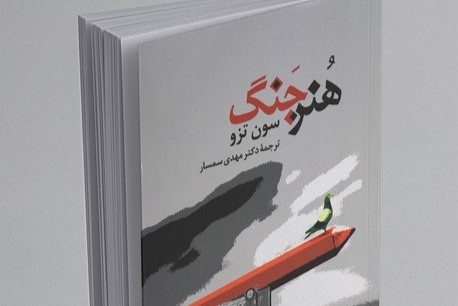
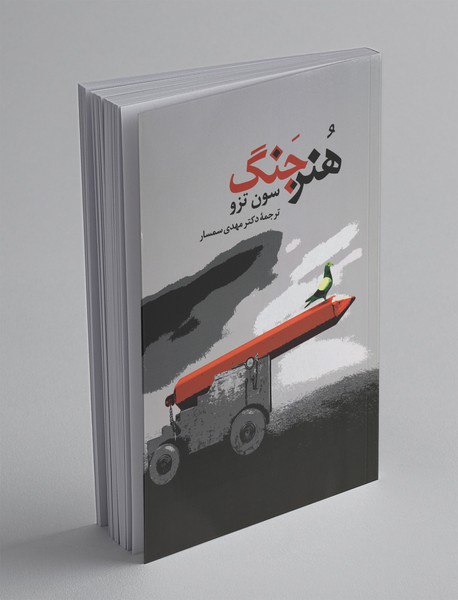
Written some 2,500 years ago, The Art of War by the legendary Chinese strategist Sun Tzu is now recognized not only as a classic military text but also as a timeless guide to success in business, sports, politics, and personal life. In concise and profound terms, the book explains the principles that form the core of any confrontation and competition. The writing style of The Art of War is concise and allegorical. Each sentence, seemingly simple and clear, has a multi-layered meaning that stems from the heart of the Chinese philosophical tradition, especially Taoist thought. Concepts such as “inaction,” “harmony with nature,” and “avoidance of excess” are found throughout the book. It is this approach that has allowed Sun Tzu’s work to go beyond the military sphere and be used in a variety of fields.
Structure and content of the book
The Art of War consists of 13 chapters, each dealing with a specific aspect of combat. Titles such as “Planning,” “Fighting,” “Strategic Attack,” “Tactical Formation,” “Energy,” “Strengths and Weaknesses,” “Maneuvering Forces,” “Changing Tactics,” “Moving the Army,” “Terrain,” “Nine Types of Terrain,” “Attacks with Fire,” and “Use of Spies” make up the chapters of this book. From the very beginning, Sun Tzu emphasizes a fundamental principle: “The highest art of war is to defeat the enemy without fighting.” This sentence alone reveals the main philosophy of the book; a philosophy that sees victory not in bloody destruction of the opponent, but in defeating his will and strategy, preferably through deception, maneuver, and intellectual superiority.
In the middle chapters, Sun Tzu addresses tactical nuances. He emphasizes the importance of “flexibility” and warns that a commander should not be dependent on a predetermined plan. Victory, he says, depends on the ability to discern the moment and seize fleeting opportunities. He sees the enemy not as an absolutely evil force, but as a mirror from which one must learn from his behavior and weaknesses. In Sun Tzu’s view, knowing the enemy is as important as knowing oneself; “He who knows himself and the enemy will not be defeated in a hundred battles.” This has also attracted the attention of many critics, who say that the chapter on “Tactical Formation” is one of the most brilliant parts of the book. It is in this chapter that Sun Tzu distinguishes between “form (形) and formlessness (无形)”, arguing that a great commander must be so flexible and formless that the enemy cannot predict his strategy.
The final chapters of the book are devoted to more practical aspects such as the use of land, weather, intelligence, and the commander’s communication with his troops. However, behind every piece of military advice lies a philosophical wisdom. Sun Tzu repeatedly emphasizes that victory is only valuable when it is achieved without the loss of strength and life. He sees war as a bitter necessity, not an instrument of honor or ambition.
Key concepts and modern applications
Some of the key concepts that distinguish “The Art of War” and have made it enduring include:
1- Know yourself and your enemy: The most famous quote in the book says: “If you know yourself and your enemy, you will have no fear of the outcome of a hundred battles. If you know yourself but not your enemy, for every victory you will experience a defeat. If you know neither yourself nor your enemy, you will be defeated in every battle.” This principle is the basis of any competitive analysis in the modern world.
2- Victory before the battle: Sun Tzu believes that war on the battlefield is the only physical manifestation of a victory that has already been achieved in the minds of commanders through careful calculations, choosing the right time and place, and weakening the enemy’s morale.
3- Flexibility: His emphasis on adaptability is like water changing its course in the face of obstacles but ultimately reaching its goal. This concept is invaluable in strategy formulation.
4- Leadership and Ethics: The book clearly addresses the qualities of a good commander: wisdom, honesty, philanthropy, courage, and strict discipline. He warns that a hasty or angry leader can lead an entire army to destruction.
Review from a global perspective
Many Western critics believe that the main reason for the immortality of The Art of War is the universality of its principles. It does not provide a “simple manual” for fighting, but rather a “framework” for strategic thinking. Sun Tzu’s The Art of War is not just a historical book; it is a philosophical-strategic work that dissects the nature of competition and conflict at its deepest level. Its power lies in the fact that it forces the reader to think, not just to act. The important point is that The Art of War is like a double-edged sword; its principles can be used for good or evil. It is up to the reader to decide with his or her own morality and wisdom how to use this ancient knowledge to build or destroy. Ultimately, as many commentators have pointed out, Sun Tzu’s greatest lesson may be this: the truest victory is a victory in which both sides benefit, not a war in which one side is destroyed.