
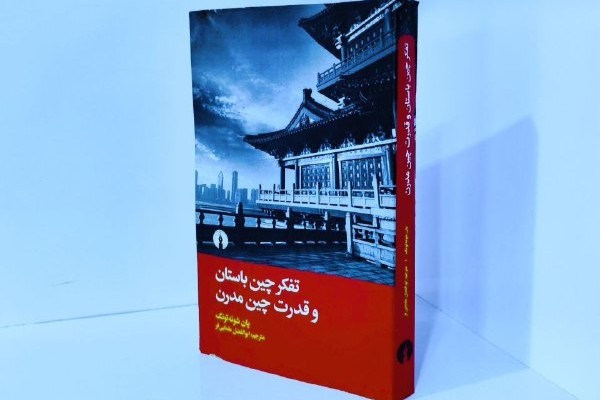
About the book
The rise of China is perhaps the most important political development of the 21st century. The process of China’s rise has raised many important questions. What will China look like in the future? And what will China’s rise mean for the rest of the world? Written by China’s most influential foreign policy thinker, Yan Xuetong, and translated by Abolfazl Ulmaeifar, this book draws a vision for the coming decades, drawing on China’s past and Confucian insights.
The main purpose of the book is to examine and extract analytical and normative insights from the political philosophies of the “pre-Chinese dynasty”[1] period (before 221 BC), especially the Warring States period, and to apply them to understanding contemporary international politics. Within this framework, in contrast to traditional Western realism, which sees power primarily in material forces (the economy and the military), Yan argues that political-moral leadership is a core component of national and international power. A virtuous and moral leader adopts prudent and popularly supported policies that, in the long run, lead to an increase in the overall power of the state. This perspective brings the element of morality and norms to the core of the analysis of international power relations.
In fact, in this book, Yan, inspired by pre-Chinese thinkers, especially the Confucian school, emphasizes the distinction between human authority and hegemony:
- Hegemony[2]: A government that relies primarily on military and economic power to dominate others, without necessarily being morally superior (Ian often cites the United States as an example of contemporary hegemony).
- Human authority[3] or wise rule: A government that derives its real power from political-moral leadership, virtue, cultural absorption, and adherence to international norms. From this perspective, economic and military power are important, but subordinate to moral authority.
The book suggests that if China is to become an influential global great power (rather than a mere hegemon), it must base its strategy on the concept of human authority—that is, increasing its influence through moral norms, cultural appeal, and providing a better governance model for the international system.
About the author
Yan Xuetang was born in Tianjin, China in December 1952. In 2008, he was named one of the world’s top 100 thinkers by the American magazine Foreign Policy. For several years, he has been ranked by Elsevier[4] as the only political scientist among Chinese scholars with the most cited articles. He is currently a distinguished professor and president of the Institute of International Relations of Tsinghua University, the secretary-general of the World Peace Forum[5], the editor-in-chief and founder of the China Journal of International Politics[6], and the vice president of the China International Relations Studies Association[7] and the China American Studies Association[8].
In the field of theory, he is the founder of “moral realism.”[9] This concept is essentially a neoclassical realist model of international relations that draws on political determinism and ancient Chinese political thought. The fundamental idea of moral realism is that the type of political leadership (specifically, its domestic accountability and external credibility) is the key variable in explaining the strategic orientation of leading countries and also in the evolution of the international system. His 1996 book, “Analyzing China’s National Interests,”[10] identifies and analyzes China’s interests in the international system.
In the Western world, Yan Xuedong is often seen as a warmongering political advisor and an enemy of liberal internationalists. But a very different picture emerges from this book, as Yan explores the lessons of ancient Chinese political thought for China’s future and the development of the “Beijing Consensus”[11] in international relations, making it clear that Yan is neither a communist who believes that economic power is the key to national power, nor a neoconservative who believes that China must rely on military might to achieve its goals.
[1]. Pre-Qin
[2]. 霸 – Ba
[3]. 王 – Wang
[4]. Elsevier
[5]. World Peace Forum
[6]. The Chinese Journal of International Politics
[7]. China Association of International Relations Studies
[8]. China Association of American Studies
[9]. Moral Realism
[10]. Analysis of China’s National Interests
[11]. Beijing consensus