
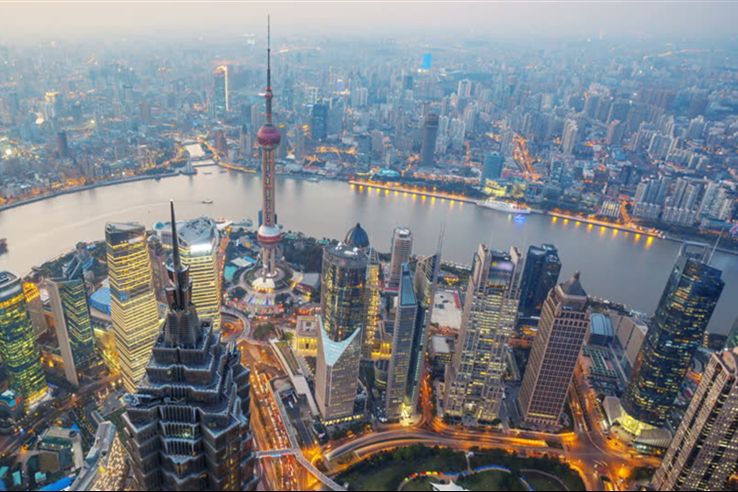
This report analyzes the structure, functions, and history of institutions related to the Shanghai Municipality. By examining the roles of key individuals and managerial milestones, it offers practical lessons for Iranian municipalities. Additionally, opportunities for cooperation and shared experiences with other countries, including Arab nations, are explored.
History of Shanghai: from Fishing Village to Global Metropolis
The history of Shanghai is a tumultuous tale of a small fishing village transforming into one of the world’s largest and most influential metropolises. The city, whose name means ‘Upon the Sea,’ has witnessed imperial dynasties, colonialism, the Communist Revolution, and astonishing economic leaps.
Beginnings (up to the 19th Century)
- Ancient Roots: For centuries, Shanghai was a small, insignificant town in the fertile Yangtze River Delta. Its origins as a fishing village and salt producer date back to the Song Dynasty (960-1279 AD).
- Transformation into a City: In 1292 AD, during the Yuan Dynasty, Shanghai was officially established as a county-level city. The construction of city walls in the 16th century, to defend against Japanese pirates, gave it a more robust urban identity. Its location at the mouth of the Yangtze River gradually transformed it into a regional trading port, especially for cotton.
Turning Point: the Opium Wars and the Concession Era (1842 – 1937)
This period marked the most significant turning point in Shanghai’s history and the beginning of its transformation into an international city.
- Forced Commercialization: After China’s defeat in the First Opium War, Britain forced the country to sign the Treaty of Nanjing in 1842. Under this treaty, Shanghai was opened to foreign trade as one of the five treaty ports. This event changed the city’s history forever.
An Image of the Opium War
- Establishment of Concessions: Western powers (initially Britain, then France and the US) took control of areas in Shanghai that became known as Concessions. These areas were outside Chinese jurisdiction and were administered by foreign municipal councils. This unique structure brought a flood of foreign merchants, adventurers, and missionaries to the city.
- First Golden Age: From the late 19th century to the 1930s, Shanghai experienced a period of explosive growth. It became the largest commercial and financial center in East Asia, earning the nicknames “Paris of the East” or “Pearl of the Orient.” European architecture in The Bund, the emergence of banks, trading companies, nightclubs, as well as illegal activities and criminal gangs, gave the city a multinational and glamorous character. During this period, the Communist Party of China was founded in 1921 in the French Concession of Shanghai.
Era of War and Revolution (1937 – 1990)
Shanghai’s golden age tragically ended with the Japanese invasion.
- Japanese Occupation: In 1937, the Battle of Shanghai, one of the bloodiest battles of the Second Sino-Japanese War, took place, and the city fell under Japanese occupation. This occupation lasted until the end of World War II in 1945, causing severe damage to the city’s economy and social life.
- Communist Rule: With the Communist Party’s victory in the Chinese Civil War in 1949, Shanghai came under the control of the new government. Many foreign companies and financial elites left the city. The Communist government restricted foreign trade, diminishing Shanghai’s international influence, and focused on transforming it into an industrial hub to meet the country’s domestic needs. For decades, although Shanghai remained an important industrial center, it lost its global standing and its former luster.
Modern Renaissance: Economic Reforms and Leap into the Future (1990 to Present)
The 1990s marked the beginning of Shanghai’s second golden age and a remarkable transformation in its history.
- Deng Xiaoping’s Strategic Decision: In 1990, China’s leader, Deng Xiaoping, made a historic decision, designating Shanghai as the “dragon’s head” of China’s economic reforms. The central government authorized extensive economic reforms and the development of the Pudong New Area (Pudong).
Pudong in 1990
- The Pudong Miracle: An area that was previously farmland transformed within a few decades into a forest of modern skyscrapers, symbolizing China’s new economic power. The Oriental Pearl Tower, Jin Mao Tower, and Shanghai Tower (China’s tallest building) all rose in this area.
- Return to Global Status: Since then, Shanghai has grown at an unprecedented pace. It hosts the world’s largest container port and is recognized as a leading global center for finance, trade, technology, and innovation. Today, Shanghai is a blend of rich history and dazzling modernity; a place where ancient temples and classical gardens stand alongside skyscrapers, and the city once again shines as one of the most dynamic and important cities in the world.
Shanghai Municipal Institutions and Their Importance
Shanghai, as one of the world’s largest metropolises and China’s economic hub, is a prime example of modern urban governance. The city’s success in managing rapid growth, developing advanced infrastructure, and implementing major national policies stems from the cohesive and efficient structure of its municipal institutions. These institutions operate within a centralized political system where the central government sets the main policies, and municipalities are responsible for implementing and adapting these policies to local conditions.
Key Role of Institutions in Urban Planning Based on China’s Centralized System
Within China’s governance system, the Shanghai Municipality is not merely a local administrative body but also an executive arm of the central government in one of the country’s most strategic regions. These institutions are tasked with implementing national policies such as industrialization, economic reforms, and sustainable development at the urban level. This centralized structure creates unparalleled coordination among economic, social, and spatial planning, allowing Shanghai to complete massive infrastructure projects with high speed and efficiency.
Importance in Implementing National Policies (Industrialization, Economic Reforms, and Sustainability)
Shanghai has always been a pioneer in implementing economic reforms in China. From the establishment of the Pudong Special Economic Zone in the 1990s to its transformation into a global financial and technology hub, municipal institutions have played a pivotal role in attracting foreign investment, developing advanced industries, and managing the transition from a traditional industrial economy to one based on services and innovation. Today, these institutions are also at the forefront of implementing national policies related to sustainability, pollution reduction, and the creation of smart cities.
A Model for Managing Rapid Urban Growth, Migration Control, and Infrastructure Development
Shanghai’s experience in managing the challenges arising from rapid urban growth, including population control, housing provision, public transport development, and resource management, has made it a case study for many developing cities, including those in Iran. The city has successfully prevented uncontrolled sprawl and pursued balanced and coordinated development by utilizing precise planning tools and efficient institutions.
Key Shanghai Municipal Institutions and Their Role in Planning
Shanghai’s success in urban governance is the result of cooperation and coordination among several specialized institutions, each with specific responsibilities. Below, the most important of these institutions and their roles are introduced.
Shanghai Municipal Commission of Housing and Urban-Rural Development
The Shanghai Municipal Commission of Housing and Urban-Rural Development is one of the municipality’s main executive arms in the field of construction and physical development of the city.
- Responsibilities: The primary responsibility of this institution is the macro-management of the construction industry, supervision of civil engineering projects, formulation and implementation of housing policies (including social housing and free market housing), and advancing urban renewal programs for dilapidated areas and old neighborhoods. Additionally, this commission oversees the coordinated development of urban and rural areas in the Shanghai suburbs.
- Importance: The importance of this commission lies in implementing projects that directly impact the quality of life for citizens. By implementing sustainable construction standards, managing urban density through housing programs, and revitalizing historical areas, this institution aims to achieve balanced and human-centered development.
Shanghai Municipal Bureau of Planning, Land and Natural Resources
The Shanghai Municipal Bureau of Planning and Natural Resources is responsible for managing the city’s most valuable asset, land, as well as long-term spatial planning.
- Responsibilities: The responsibilities of this institution include preparing and formulating master and detailed urban plans, overseeing land use, managing natural resources such as water and green spaces, and issuing necessary permits for urban developments. This bureau ensures optimal land allocation for various uses (residential, commercial, industrial, green spaces) by utilizing precise mapping tools and Geographic Information Systems (GIS).
- Importance: This bureau plays a key role in regulating urban expansion patterns and preventing uncontrolled sprawl. The development of areas like Pudong, which transformed Shanghai into a global financial center, was a direct result of strategic planning and efficient land management by this institution.
Shanghai Municipal Planning Commission
The Shanghai Municipal Planning Commission operates at a higher level than the planning bureau and is responsible for coordinating various dimensions of development.
- Responsibilities: This institution seeks to integrate and unify economic, social, and urban planning. While the planning bureau focuses on physical and spatial aspects, this commission ensures that urban plans align with broader economic goals (such as the growth of specific industries) and social objectives (such as equitable distribution of services).
- Importance: The power of this commission lies in its ability to create a shared and coordinated vision for the city’s future. This tripartite integration of planning prevents fragmented and uncoordinated decisions, ensuring that all aspects of development are viewed holistically.
China Institute for Urban Governance
The China Institute for Urban Governance (CIUG), established in collaboration with Shanghai Jiao Tong University and the Municipality, is a research and consulting institution.
- Responsibilities: CIUG conducts advanced research on complex urban issues such as sustainability, smart cities, crisis management, and citizen participation. It provides evidence-based expert advice to urban managers and helps train a new generation of urban governance specialists.
- Importance: This institute acts as a bridge between academia and the policy-making arena. By translating theoretical knowledge into practical solutions, CIUG helps the Shanghai Municipality constantly advance at the forefront of urban governance knowledge and utilize innovation to solve its challenges.
Shanghai Urban Planning and Design Research Institute
The Shanghai Urban Planning and Design Research Institute (SUPDRI) is the technical and design arm of the municipality for major urban projects.
- Responsibilities: SUPDRI is responsible for preparing conceptual and executive plans for large-scale projects, ranging from designing new urban areas to designing public spaces and key infrastructure. This institute also conducts extensive research on urban development and architectural trends.
- Importance: The role of this institute in shaping the physical landscape of modern Shanghai is undeniable. Iconic projects such as the design of the Expo 2010 World Exhibition site, the development of the Hongqiao Central Business District, and the design of many urban parks and squares are among this institute’s achievements.
Shanghai Municipal Development Reform Commission
The Shanghai Municipal Development Reform Commission is the most powerful economic institution of the municipality and acts as a ‘mini-government’ in the field of economic planning.
- Responsibilities: This institution is responsible for formulating the city’s five-year economic and social development plans, approving major investment projects (both public and private), regulating prices for essential services, and overseeing the implementation of economic reforms.
- Importance: This commission ensures that the city’s economic growth is aligned with its infrastructure development and physical expansion. By directing investments towards strategic industries and overseeing major projects, this institution plays a vital role in maintaining Shanghai’s economic dynamism and global competitiveness.
Key Figures in the Historical Development of Shanghai Municipality
The development of modern Shanghai was not solely the product of efficient institutions but was also guided by visionary urban leaders and managers who were able to turn ambitious visions into reality. These individuals, through strong connections with the central government, secured the necessary political support and financial resources to implement transformative projects.
Zhu Rongji
- Term of Office: Mayor of Shanghai (1987-1991)
- Achievements: Zhu Rongji is known as the architect of modern Shanghai’s reconstruction. His most significant and lasting achievement was initiating the massive Pudong New Area development project. Prior to that, Pudong was an agricultural and underdeveloped area east of the Huangpu River. With a deep understanding of economics and the support of the central government led by Deng Xiaoping, Zhu put forward the vision of transforming this area into a global financial, commercial, and technological hub. By offering attractive tax exemptions, creating modern infrastructure, and reducing bureaucracy, he managed to attract a flood of foreign and domestic investments to the area. This initiative not only changed Shanghai’s face forever but also became a model for the development of special economic zones across China.
Jiang Zemin
- Term of Office: Mayor of Shanghai (1985-1987) and Secretary of the Communist Party in Shanghai (1987-1989)
- Achievements: Jiang Zemin, who later rose to lead all of China, focused on modernizing infrastructure and industries during his tenure in Shanghai. He laid the necessary foundations for the economic boom of the 1990s. His actions included improving the urban transportation system, renovating old factories, and strengthening Shanghai’s international relations. His period of leadership in Shanghai served as a launchpad for him to reach the highest levels of leadership in China, and this experience gave him a profound understanding of the importance of cities as engines of national economic growth.
Han Zheng
- Term of Office: Mayor of Shanghai (2003-2012)
- Achievements: Han Zheng took office at a time when Shanghai had become a global metropolis but faced new challenges such as sustainability, quality of life, and international competition. His greatest achievement was the successful hosting of the Expo 2010 World Exhibition with the slogan “Better City, Better Life.” This massive event provided an opportunity for urban regeneration, improvement of public transportation infrastructure (especially the development of the metro network), enhancement of environmental standards, and strengthening Shanghai’s international standing. Han Zheng also focused on developing modern service industries, the creative economy, and transforming Shanghai into a “Global City” with high living standards.
Xi Jinping’s Role in Shanghai’s Development (Xi Jinping)
Xi Jinping, the current leader of China, although not the mayor of Shanghai, served as the Secretary of the Communist Party in the city (in 2007) for a short period. Nevertheless, his influence on Shanghai’s development during his national leadership has been profound and strategic.
- Key Initiatives: Xi Jinping has introduced several national initiatives, with Shanghai at the center of their implementation. The Shanghai Free-Trade Zone (Shanghai Free-Trade Zone), established in 2013, is a national laboratory for economic and financial reforms, aiming to facilitate international trade,
liberalize interest rates, and further open the service sector to foreign investment.
Shanghai Free-Trade Zone
- Science and Technology Innovation Board(STAR Market): In 2019, by direct order of Xi Jinping, this exchange was launched in Shanghai to help Chinese high-tech companies raise capital and compete with NASDAQ. This move strengthened Shanghai’s position as a major technology and innovation hub.
Shanghai Composite Index
- Yangtze River Delta Integration Strategy: This national strategy, led by Xi Jinping, aims to create a global urban cluster centered on Shanghai. The plan emphasizes economic coordination, joint infrastructure development, and environmental protection across the entire region, solidifying Shanghai’s leading role in the regional and national economy.
Review of Recent Shanghai Mayors’ Performance: Gong Zheng and Ying Yong
- Shanghai, as China’s economic capital, has always been governed by prominent and influential figures within the Communist Party of China. The mayors of this metropolis are not merely city executives but key players on the national political and economic stage. Below is a report on the current mayor, Gong Zheng, and the former mayor, Ying Yong.
Current Mayor: Gong Zheng
- Tenure: From March 2020 to present
- Background and Career Path: Gong Zheng is an experienced technocrat with extensive experience in economic and customs fields, who took the helm of Shanghai’s mayoralty amidst the global COVID-19 crisis.
Customs and Economy: Gong Zheng spent a significant portion of his professional career at the General Administration of Customs of China, rising through the ranks from deputy head of a local branch to deputy director-general of the General Administration of Customs of China (2003-2008). This experience provided him with a deep understanding of international trade, logistics, and financial affairs, which is crucial for managing a city like Shanghai, home to the world’s largest container port.
Management Experience in Key Provinces: Before coming to Shanghai, Gong had a distinguished management record in two important Chinese provinces:
- Vice Governor of Zhejiang: (Zhejiang) From 2008 to 2015, he served in this province, known as a hub for e-commerce and private Chinese companies (such as Alibaba).
- Party Secretary and Governor of Shandong:(Shandong) He was first appointed Party Secretary of the important coastal city of Jinan, and then in 2017, he became Governor of Shandong Province, one of China’s largest provincial economies.
- His Key Priorities and Policies in Shanghai:
- Post-COVID-19 Economic Reopening and Strengthening: The most significant challenge for Gong Zheng at the outset was managing the economic and social consequences of the COVID-19 pandemic. He focused on the city’s economic reopening, re-attracting foreign investment, and solidifying Shanghai’s position as a global financial hub.
- Digital Economy and Innovation: Gong Zheng places special emphasis on accelerating digital transformation in Shanghai. He aims to strengthen the city’s position as a global innovation hub in areas such as artificial intelligence, biotechnology, and integrated circuits (semiconductors).
- Improving the Business Environment: He has implemented numerous policies to facilitate business activities, reduce bureaucracy, and provide better services to domestic and foreign companies. The main goal is to maintain Shanghai’s attractiveness for international investors in the face of global competition.
Sustainable Development and Quality of Life: In line with the Shanghai 2035 Master Plan, Gong Zheng’s administration has continued to implement environmental projects, expand green spaces, and improve public services to enhance the quality of life for citizens.
Gong Zheng is known as a pragmatic executive and an expert in economic affairs, whose primary task is to guide Shanghai in the post-pandemic era and strengthen its competitive advantages in a complex global environment.
Former Mayor: Ying Yong
- Tenure: From January 2017 to March 2020
- Background and Career Path: Ying Yong is a jurist and a close associate of President Xi Jinping, whose tenure in Shanghai was marked by economic stability and a focus on legal and social reforms.
Expert in Legal and Judicial Affairs: Unlike many Chinese leaders, Ying Yong has a long history in the judicial and security systems. He served for years in various positions, including President of the High Court and Chief of Police of Zhejiang Province.
Close Collaboration with Xi Jinping: The most significant part of Ying Yong’s career was his close collaboration with Xi Jinping during Xi’s tenure in Zhejiang Province. This close relationship made him one of the trusted figures in China’s leadership.
Arrival in Shanghai: Ying was transferred to Shanghai in 2013 and served as Deputy Secretary of the Communist Party in the city before becoming mayor.
- Key Priorities and Policies in Shanghai:
- Legal and Judicial Reforms: Given his background, Ying Yong sought to make Shanghai’s judicial system more efficient and transparent. He emphasized creating a reliable legal environment for businesses, which is vital for an international financial center.
- Development of the Free Trade Zone: During his tenure, the (Shanghai Free-Trade Zone) expanded, and new reforms were implemented to facilitate trade and investment within it.
- Launch of the Science and Technology Innovation Board: (STAR Market) One of the most significant achievements during Ying Yong’s administration was the successful launch of this exchange in 2019. This initiative, supported directly by the central government, solidified Shanghai’s position as a center for financing China’s high-tech companies.
- Smart City Management: He emphasized the use of technology to improve urban management, from traffic control to waste management, and laid the groundwork for many of Shanghai’s smart city projects during his tenure.
Historical Trend of Shanghai’s Urban Expansion and Lessons for Iranian Municipalities
Shanghai’s urban planning model has undergone profound transformations over the past decades, each reflecting the economic, social, and political conditions of its time.
Evolution of the Planning Model:
- Rational-Comprehensive Planning Period (1950s to 1980s): During this period, influenced by the Soviet centralized planning model, long-term master plans were prepared, emphasizing land-use zoning, industrial development, and strict government control over all aspects of urban development. This approach was rigid, inflexible, and top-down.
- Strategic Planning Period (1990s to 2000s): With the onset of economic reforms and the development of Pudong, the planning approach shifted from static master plans to strategic and project-oriented planning. This model focused on identifying key high-impact projects (such as special economic zones, financial centers, and large infrastructure projects) to drive rapid economic growth. This approach offered greater flexibility but sometimes led to spatial inconsistencies and inequalities.
- Integrated and Sustainable Planning Period (Current): Today, Shanghai is moving towards an integrated and coordinated planning model that seeks to balance economic growth, social equity, and environmental sustainability. The Master Plan “Shanghai 2035″ is an example of this approach, emphasizing quality of life, environmental protection, public transport development, cultural heritage preservation, and citizen participation. This model is more complex and comprehensive than previous ones.
Milestones in Shanghai’s Urban Management:
- Decision to Develop Pudong (1990): This turning point transformed Shanghai from a declining industrial city into a global financial center and showcased a new model of urban development based on attracting foreign investment.
- Hosting Expo 2010: This event became a catalyst for urban renewal, infrastructure improvement, and raising public awareness about sustainable development.
- Launch of the Free Trade Zone (2013): This move solidified Shanghai’s role as a pioneer of economic and financial reforms in China.
- Approval of the Shanghai 2035 Master Plan: This plan signifies the maturity of Shanghai’s urban management and its move towards human-centered, sustainable, and high-quality development.
Practical Lessons for Iran
Shanghai’s experience, despite political and cultural differences, can offer valuable lessons for urban management in Iran.
1. Economic Reforms and Targeted Investment Attraction:
Instead of attracting all types of capital, Shanghai strategically focused on attracting foreign direct investment (FDI) in high-tech industries, financial services, and innovative sectors. Iranian municipalities can, by creating urban special economic zones with transparent regulations and targeted incentives, direct domestic and foreign capital towards sectors that create competitive advantages. Creating investment opportunities and reducing bureaucracy, similar to Shanghai’s experience, is crucial.
2. Centralized yet Flexible Planning:
Shanghai’s success in implementing large-scale projects stems from a long-term, centralized vision pursued by all institutions. However, this centralized planning is accompanied by local-level flexibility, allowing projects to adapt to market conditions. Iranian municipalities need to strengthen upstream planning institutions (such as the Urban Planning and Budget Organization) to formulate binding master plans, but at the same time, they must grant more authority to district municipalities and local stakeholders for the creative implementation of these plans.
3. Sustainability and Harmonious Urbanization:
In recent years, Shanghai has made massive investments in expanding green spaces, constructing “Greenways” for walking and cycling, waste management, and air pollution control. The city has realized that quality of life and the environment are key factors in attracting talent and maintaining competitiveness. Iranian municipalities can emulate Shanghai’s model in allocating specific budgets for environmental projects, creating large urban parks, and enacting strict regulations for industrial pollutants.
4. Infrastructure Development as a Driver of Growth:
Shanghai first established world-class infrastructure (metro, airports, ports, fiber optic networks), and then economic and urban development took shape on this foundation. This “infrastructure-driven” approach, investment risk for the private sector reduces. Iranian municipalities, especially in the development of new cities and peripheral areas, must emphasize providing basic infrastructure as a prerequisite for any residential or commercial development. The use of Project Finance Models (Project Finance) and Public-Private Partnerships (PPP) can be instrumental in this regard.
Institutions with Potential for Cooperation with Iran
Cooperation with leading institutions in Shanghai can help transfer knowledge, technology, and capital to Iranian cities.
1. Shanghai Cooperation Organization
Iran is now a full member of this organization. This organization increasingly focuses on economic, trade, and technological cooperation. It can serve as a platform for defining joint projects in sustainable urban development, smart cities, and transportation. Major Iranian municipalities can, through this organization, cooperate with Shanghai and other member cities in exchanging management experiences and implementing pilot projects.
2. China Institute for Urban Governance: (CIUG)
This institute can be an ideal partner for academic collaborations and knowledge exchange. Municipalities of Tehran, Isfahan, Mashhad, and other metropolises can, by signing memoranda of understanding with CIUG, organize joint training courses for urban managers and experts, define joint research projects on urban challenges (such as traffic, air pollution, waste management), and benefit from the institute’s specialized consultations.
3. Shanghai Development and Reform Commission:
This commission can be an important partner for Iran in attracting investment and advanced technologies. Given its focus on green economy and innovative industries, there are opportunities for cooperation in areas such as renewable energy, water and wastewater management technologies, and digital infrastructure development. Chinese companies operating under the supervision of this commission can be potential partners for large infrastructure projects in Iran.
Cooperation between Arab Countries and Shanghai Municipality
Shanghai, as a global financial and commercial center, has established extensive relations with various countries, including Arab nations. These collaborations primarily focus on economic, investment, and trade aspects.
Dubai as a Special Example:
The relationship between Shanghai and Dubai is a prominent example of these collaborations. Both cities aim to become major hubs in their respective regions and share many similarities in their development models (focusing on trade, logistics, financial services, and tourism).
- Mutual Investment: Major Emirati companies such as Emaar and DP World have made significant investments in Shanghai. DP World participates in the management and operation of container terminals at Shanghai Port. Conversely, Chinese companies are also active in infrastructure and technology projects in Dubai.
- Smart Cities: The Shanghai Urban Planning and Design Research Institute (SUPDRI) and the China Institute for Urban Governance (CIUG) collaborate on research and consulting projects with Arab countries, particularly the UAE and Saudi Arabia. These collaborations focus on transferring smart city technologies, such as intelligent transportation systems and waste management. For example, Dubai has emulated Shanghai’s urban management model for the development of its smart city projects.
- Exchange Collaborations: The Shanghai Gold Exchange and the Dubai Gold and Commodities Exchange have established strategic collaborations to facilitate gold trade between the two regions.
- Knowledge Exchange in Free Zones: Dubai and Shanghai both have successful experiences in establishing and managing free trade and economic zones. These two cities regularly exchange knowledge and experiences in this area to share best practices.
- Tourism and Air Transport: Due to numerous direct flights between the two cities, extensive collaborations in tourism and air logistics have formed, which help strengthen commercial and cultural ties.
- In addition to the UAE, other countries such as Saudi Arabia and Qatar are also seeking to strengthen economic ties with Shanghai, particularly in areas of investment in technology, new energies, and infrastructure. These collaborations indicate that Shanghai’s development model and its economic institutions hold high appeal for countries looking to diversify their economies and attract investment. Saudi Arabia, within the framework of Vision 2030 and as an SCO dialogue partner, has growing relations with the Shanghai Municipality. The Municipal Development and Reform Commission has participated in negotiations related to investment in infrastructure projects and green technologies with Saudi companies. For example, in 2022, Chinese companies supervised by this commission invested in renewable energy projects in Saudi Arabia, part of which is linked to technology exchange with Shanghai.
Shanghai’s Future Urban Development Plans
Shanghai, as one of the world’s largest megacities and China’s economic hub, has formulated its urban development plans based on long-term visions. These plans are primarily built upon the Shanghai Master Plan for 2017-2035, whose main goal is to transform Shanghai into an “Excellent Global City ” (Excellent Global City) . The main focus of this vision is on sustainability, innovation, population management, and the integration of digital technologies. These plans are guided by the central Chinese government, with bodies such as the Shanghai Municipal Development and Reform Commission and the Shanghai Municipal Bureau of Planning and Natural Resources responsible for their implementation.
1. Shanghai Master Plan 2017-2035: Foundation for Future Development
The 2035 Master Plan, approved in 2017, defines the main framework for Shanghai’s urban development until 2035. This plan is formulated based on people-oriented principles and aims to create a balance between economic growth, quality of life, and environmental protection.
- Key Objectives:
- Population Management and Urban Expansion: Shanghai’s population will be capped at 25 million by 2035 (from approximately 24.3 million in 2017). The urban boundary is limited to 2800 square kilometers to prevent uncontrolled expansion, with 2433 square kilometers allocated for natural preservation.
- Environmental Sustainability: Reducing carbon emissions and energy consumption per unit of GDP, addressing sea-level rise and mitigating urban heat island effects by 2035, as well as ensuring at least 60% of energy comes from renewable sources and increasing urban green spaces.
- Innovation and Economy: Transforming Shanghai into a global hub for science, technology, and innovation. Developing areas like Pudong as financial and technological centers, with a focus on artificial intelligence, biotechnology, and semiconductors. According to this document, over 200 smart factories and 50 digital hospitals should be built by 2035.
- Transportation and Infrastructure: Expanding the metro network to over 1000 kilometers, reducing commute times to less than 45 minutes within the city, and developing green transportation (such as electric vehicles). Key projects include the Shanghai West Railway Station, which will serve as a new gateway to China.
- Housing and Quality of Life: Renovating dilapidated areas, increasing affordable housing and developing public spaces, as well as increasing the number of art galleries, parks, and cultural centers to improve the quality of life.
2. 2025 Updates: Short-Term Action Plans
2025 marks the final year of China’s 14th Five-Year Plan (2021-2025), and Shanghai has formulated specific action plans to accelerate development. These updates emphasize a green and digital economy, guided by Xi Jinping.
- 2025 Action Plan for New Cities (New Cities): Focusing on the development of five new areas (such as Jiading, Qingpu, and Fengxian) with 186 major projects across five categories: science and technology industries (66 projects), social welfare, infrastructure, and sustainability. These plans include the construction of smart cities and carbon emission reduction.
- Energy and Environment : Reducing energy consumption and CO2 emissions per unit of GDP, with the goal of over 50% of energy from wind and solar by 2035, and urban drainage projects (Shanghai Urban Drainage Masterplan) to be implemented in 285 areas by 2030.
- Regional Cooperation: Integration with surrounding provinces (Jiangsu, Zhejiang, Anhui) to create a global urban cluster, focusing on shared transportation and environmental protection.
These updates reflect a focus on sustainable growth following the COVID-19 pandemic and global competition.
3. Long-Term Visions up to 2040 and Beyond
Although the main plan extends to 2035, the 2040 plans have been expanded based on simulation models and national visions. These plans focus on reurbanization and technology integration.
- Urban Land Growth: By 2040, urban land is projected to increase to approximately 1190-1434 square kilometers (depending on historical or sustainable scenarios), with a focus on new areas like Lujiazui for metropolitan redevelopment.
- Economy and Innovation: Becoming a global financial, commercial, and scientific center, competing with cities like New York and London. Population increase to 25 million, with a focus on green and smart industries.
- Sustainability and Quality of Life: Reducing pollution, increasing green spaces, and improving public areas. Overall Redevelopment of the city by 2040, focusing on improving the quality of human life.
- Demographics and Challenges: With an aging population, plans for smart urbanization until 2040, including the use of technology to reduce energy consumption and improve the lives of the elderly.
Conceptual Model of Shanghai’s Vision
Conclusion
Shanghai stands as a successful example of a megacity that has managed to harmonize rapid economic growth with urban development, relying on efficient institutions, visionary leaders, and a coherent planning model. The city’s governance structure, where specialized institutions operate with clear responsibilities and in full coordination with each other and with national policies, has been the main key to its success. From the Development and Reform Commission, which is the city’s economic engine, to the Planning Department, which shapes its physical form, and research institutions that inject knowledge and innovation into the policymaking cycle, all are components of an integrated development machine.
Shanghai’s experience is a successful model of urban management, demonstrating how a megacity can integrate rapid economic growth with sustainable and human-centered development by relying on institutional convergence, strategic leadership, and integrated planning. Beyond being an economic engine, this city is a governance laboratory that has managed to solve complex modern urbanization challenges through innovation and cooperation.
For Iran, this model offers fundamental lessons beyond mere replication. Lessons that emphasize the necessity of integration in planning, prioritizing infrastructure as an engine of development, and targeted capital attraction instead of uncontrolled growth. Shanghai demonstrates that the future of cities lies in competitiveness based on quality of life, environmental sustainability, and a knowledge-based economy.
Given Iran’s membership in the Shanghai Cooperation Organization, unique opportunities have arisen to transfer this knowledge and experience to Iranian cities. Collaboration with leading Shanghai institutions, particularly in the areas of smart cities, renewable energies, and urban project financing, can assist Iranian cities in overcoming current challenges and charting a path for sustainable development in the 21st century. Ultimately, the Shanghai model emphasizes that effective urban management is key to national and regional transformation.
For Iranian municipalities, studying Shanghai’s experience is valuable not for mere replication, but for modeling its fundamental principles. Principles such as: integration in planning, targeted capital attraction, prioritizing infrastructure, and moving towards sustainable and human-centered development. International collaborations with leading Shanghai institutions, whether through multilateral platforms like the Shanghai Cooperation Organization or bilateral relations, can smooth the path for transferring this knowledge and experience, assisting Iranian cities in confronting the complex challenges of urbanization in the 21st century.
References
- China and Maritime Europe, 1500–1800: Trade, Settlement, Diplomacy, and Missions
- Champions Day : The End of Old Shanghai by James Carter(Author, St. Joseph’s University)
- https://ciug.sjtu.edu.cn/En/FacultyDetail
- https://www.economist.com/asia/2003/03/06/what-he-did-and-left-undone
- https://www.bie-paris.org/site/fr/2010-shanghai
- https://www.csis.org/blogs/trustee-china-hand/two-years-how-does-star-market-measure
- “Politics of Shanghai”. South China Morning ost. China. Retrieved August 12, 2013.
- https://journals.openedition.org/chinaperspectives/pdf/4731
- https://www.academia.edu/10401785/Urban_Planning_of_Shanghai_the_21st_Century_City
- https://www.mofa.gov.ae/en/mediahub/news/2023/5/6/06-05-2023-uae
- https://www.middleeastbriefing.com/news/the-uae-joins-the-shanghai-cooperation-organisation-as-a-dialogue-partner/
- https://oxfordre.com/asianhistory/display/10.1093/acrefore/9780190277727.001.0001/acrefore-9780190277727-e-689
- https://en.planning.org.cn/special/ccpr/book_view?id=10035
- https://journals.openedition.org/chinaperspectives/7225?lang=en
- https://rshp.com/projects/masterplanning/shanghai-masterplan/
- https://unhabitat.org/shanghai-manual-a-guide-for-sustainable-urban-development-in-the-21st-century-2024-annual-report